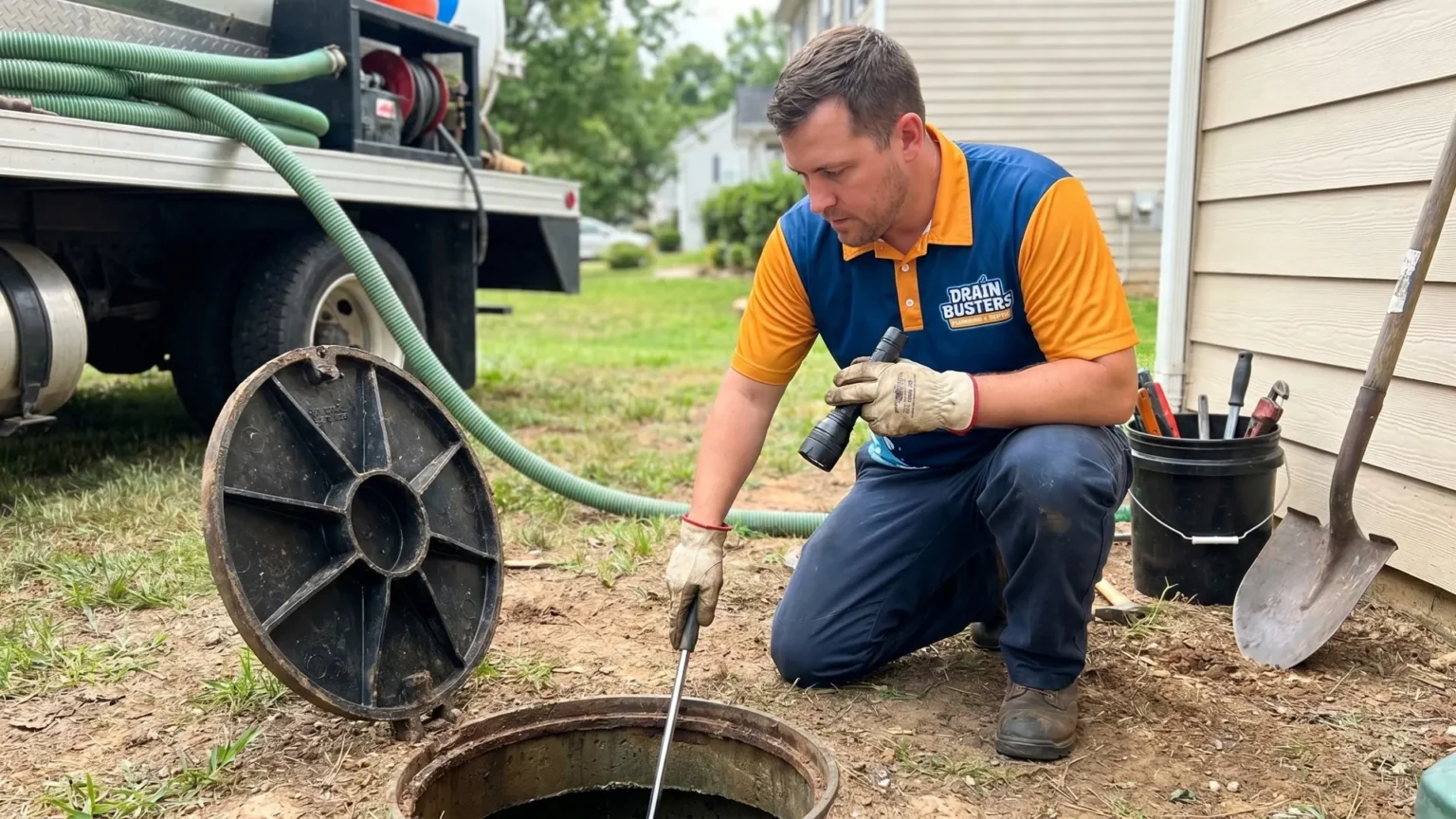
EFFLUENT PUMPS • SEPTIC PUMPS • ALARM DIAGNOSIS
Effluent & Septic Pump Repair in Mobile, AL
DrainBusters diagnoses and repairs onsite wastewater pump systems when the alarm is on, the pump will not run, the chamber will not lower, or a float, control or discharge problem is keeping wastewater from moving.
Alabama Master Plumber • AOWB Licensed Septic Installer & Pumper • 24/7 Emergency Service
ONSITE WASTEWATER PUMP SYSTEMS
The Pump Is Only One Part of the Septic System
Some onsite wastewater systems use an effluent or septic pump to move liquid from a pump chamber to another part of the treatment or dispersal system. A high-water condition can be caused by the pump, but it can also come from a float, control, alarm, discharge line or downstream system problem.
Pump & Motor
The submersible pump must start reliably and move the expected wastewater volume through the discharge path.
Floats & Controls
On/off floats, timer or control components and alarm functions determine when the pump should run and when the property should be warned.
Discharge & Receiving Area
A working pump still cannot lower the chamber if the discharge path is restricted, backflowing or feeding a downstream area that cannot accept flow.
COMMON SEPTIC PUMP PROBLEMS
Signs Your Effluent or Septic Pump System Needs Diagnosis
High-Water Alarm
The alarm may indicate the wastewater level has reached the alarm float because the pump did not run or the chamber is not drawing down.
Pump Will Not Start
A failed pump, float, control, connection or electrical condition can prevent the pump from responding when the chamber level rises.
Chamber Will Not Lower
If the pump runs but the liquid level stays high, the problem may involve weak pump performance, backflow, a restricted discharge or a downstream system issue.
Rapid or Abnormal Cycling
Frequent starting and stopping can point to float position, control logic, backflow or changing system conditions that need to be evaluated.
Breaker Trips or Pump Hums
Electrical overload, a locked or damaged pump, failed motor components or another fault can cause humming, tripping or no-start conditions.
Recurring Alarm After Pumping
If the chamber is pumped down but fills again without normal discharge, the underlying pump, control or downstream problem still needs diagnosis.
DIAGNOSE BEFORE REPLACING
Pump, Float, Control or Discharge Problem?
A septic pump alarm does not automatically mean the pump itself is bad. We work through the system so the failed component—or downstream condition—is identified before replacement is recommended.
Power & Control Response
Verify accessible power, alarm/control response and whether the system is actually calling for the pump to operate.
Float Operation
Check accessible on/off and alarm floats for fouling, interference, damage or a condition that prevents the correct start/stop sequence.
Pump Condition
Evaluate whether the pump starts, draws current normally, moves wastewater and appears capable of lowering the chamber.
Discharge Path
Look for evidence of restriction, backflow, check-valve trouble or a downstream condition that prevents a working pump from moving flow.
PUMP-TRUCK ADVANTAGE
Pump Down the Chamber When Access Is Needed
When the wastewater level is too high for effective inspection, DrainBusters can use vacuum equipment to lower the chamber and remove accumulated material so accessible pumps, floats, piping and controls can be evaluated more clearly.
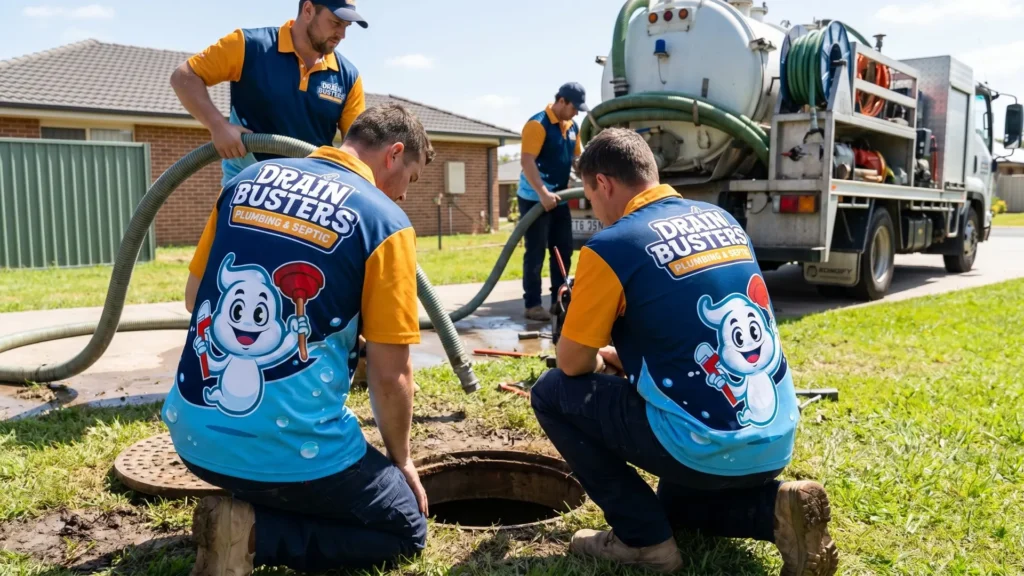
Real DrainBusters septic service equipment used to lower wastewater levels when pump-chamber access or diagnosis requires pump-down.
Pumping the chamber is not the same as repairing the cause. If the chamber fills again because the pump, float, control, discharge line or downstream septic system is still failing, the underlying condition still needs to be corrected.
TEST • ISOLATE • VERIFY
Our Effluent & Septic Pump Diagnostic Process
1. Confirm Alarm & Liquid Level
Document the reported symptom, chamber level and whether the pump is running, silent, humming or cycling abnormally.
2. Lower the Chamber if Needed
Use vacuum equipment when access or wastewater level prevents meaningful inspection and testing.
3. Check Floats & Controls
Evaluate accessible level controls, alarm operation and the sequence that should call the pump on and off.
4. Test Pump Response
Determine whether the pump starts and whether it actually lowers the chamber as expected.
5. Evaluate Discharge
Check for signs of backflow, restriction or another condition beyond the pump that may prevent wastewater movement.
6. Explain Repair Options
Separate component repair, pump replacement and downstream septic-system needs so the recommended work matches the actual failure.
REPAIR VS. REPLACEMENT
Not Every Septic Pump Alarm Needs a New Pump
If the pump itself can still move wastewater, the repair may involve a float, connection, control component or discharge condition instead of complete pump replacement. When the pump has electrically or mechanically failed, replacement should be sized and configured for the system already installed.
Repair May Make Sense When
The pump operates but a float, accessible control, connection, alarm component or discharge issue is preventing correct system operation.
Replacement May Be Needed When
The motor or winding has failed, the pump is mechanically locked or damaged, or testing shows it can no longer move wastewater reliably.
SEPTIC SYSTEM CONNECTION
What If the Pump Runs but Wastewater Still Cannot Go Anywhere?
A pump can be operational and the system can still stay full. A restricted discharge, backflow, distribution problem, saturated receiving area or failing drainfield may keep wastewater from leaving the chamber normally. Replacing a working pump will not correct a downstream septic-system failure.
Discharge Restriction
Piping, valves or fittings can restrict flow or allow wastewater to return to the chamber.
Distribution Problem
A downstream distribution component may be blocked, damaged or unable to accept the pumped flow correctly.
Drainfield Condition
If the receiving area is saturated or failing, the chamber may remain high even when the pump itself is operational.
MOBILE COUNTY SEPTIC PUMP SERVICE
Effluent & Septic Pump Repair Across Mobile County
DrainBusters provides onsite wastewater pump diagnosis, pump-chamber service, repair and replacement across Mobile and Mobile County from our Theodore and West Mobile service presence.
Common service areas include Mobile, West Mobile, Theodore, Tillmans Corner, Semmes, Irvington, Grand Bay and surrounding Mobile County communities.
EFFLUENT & SEPTIC PUMP FAQ
Questions Customers Ask Us
What is an effluent pump?
An effluent pump is a submersible wastewater pump used in some onsite septic systems to move liquid from a pump chamber to another part of the treatment or dispersal system. The exact pump and control arrangement depends on how the system was designed.
Why is my septic pump alarm going off?
A high-water alarm usually means the liquid level reached the alarm point. The cause may be a failed pump, a float or control problem, loss of power, a restricted discharge or a downstream septic-system condition that is preventing the chamber from lowering.
Can a bad float make it look like the septic pump is dead?
Yes. If an on/off float or control does not call for the pump correctly, the pump may never be energized even though the pump itself can still operate. That is one reason the float and control sequence should be checked before replacing the pump.
Can you pump down the chamber before diagnosing the pump?
Yes, when access and conditions allow. DrainBusters has vacuum equipment that can lower the wastewater level so accessible pumps, floats, piping and controls can be inspected and tested more clearly.
Can the pump run but still fail to lower the chamber?
Yes. Weak pump performance, backflow, a restricted discharge line, check-valve trouble or a downstream septic-system problem can keep the chamber high even while the pump is running.
Do you replace effluent and septic pumps?
Yes. When testing shows the installed pump has failed or can no longer move wastewater reliably, DrainBusters can provide a replacement option based on the existing system configuration and installation conditions.
Does a full pump chamber mean the drainfield has failed?
Not necessarily. A full chamber can result from the pump, floats, controls, discharge piping or the downstream receiving area. The system should be diagnosed before assuming the drainfield is the cause.
Do you service septic pump systems across Mobile County?
Yes. DrainBusters provides effluent and septic pump diagnosis, repair and replacement throughout Mobile, Theodore, West Mobile, Semmes, Irvington, Grand Bay, Tillmans Corner and surrounding Mobile County communities, subject to site access and system conditions.
Septic Pump Alarm, Full Chamber or Pump Failure?
Call DrainBusters for effluent and septic pump diagnosis, chamber pump-down, float and control troubleshooting, repair and replacement across Mobile and Mobile County.
Onsite Wastewater Systems • Pump Chambers • Effluent Pumps • Septic Pumps