LIFT STATION REPAIR • PUMP-OUT • CONTROLS
Lift Station Service & Repair in Mobile, AL
High-water alarm? Full basin? Pumps not cycling? DrainBusters diagnoses, pumps down and services residential and commercial lift stations across Mobile County—including pumps, floats, controls, alarms and discharge problems. We identify the cause before recommending cleaning, repair or replacement.
Alabama Master Plumber & Master Gasfitter • Licensed Septic Installer & Pumper • 24/7 Emergency Service
WHOLE-SYSTEM LIFT STATION DIAGNOSTICS
The Lift Station Is a Complete Wastewater System
A lift station is more than a pump. Pumps, floats and level controls, alarms, control equipment, check valves, basin conditions, discharge piping and the downstream sewer all have to work together. Replacing a pump before finding the actual cause can leave the original problem in place.
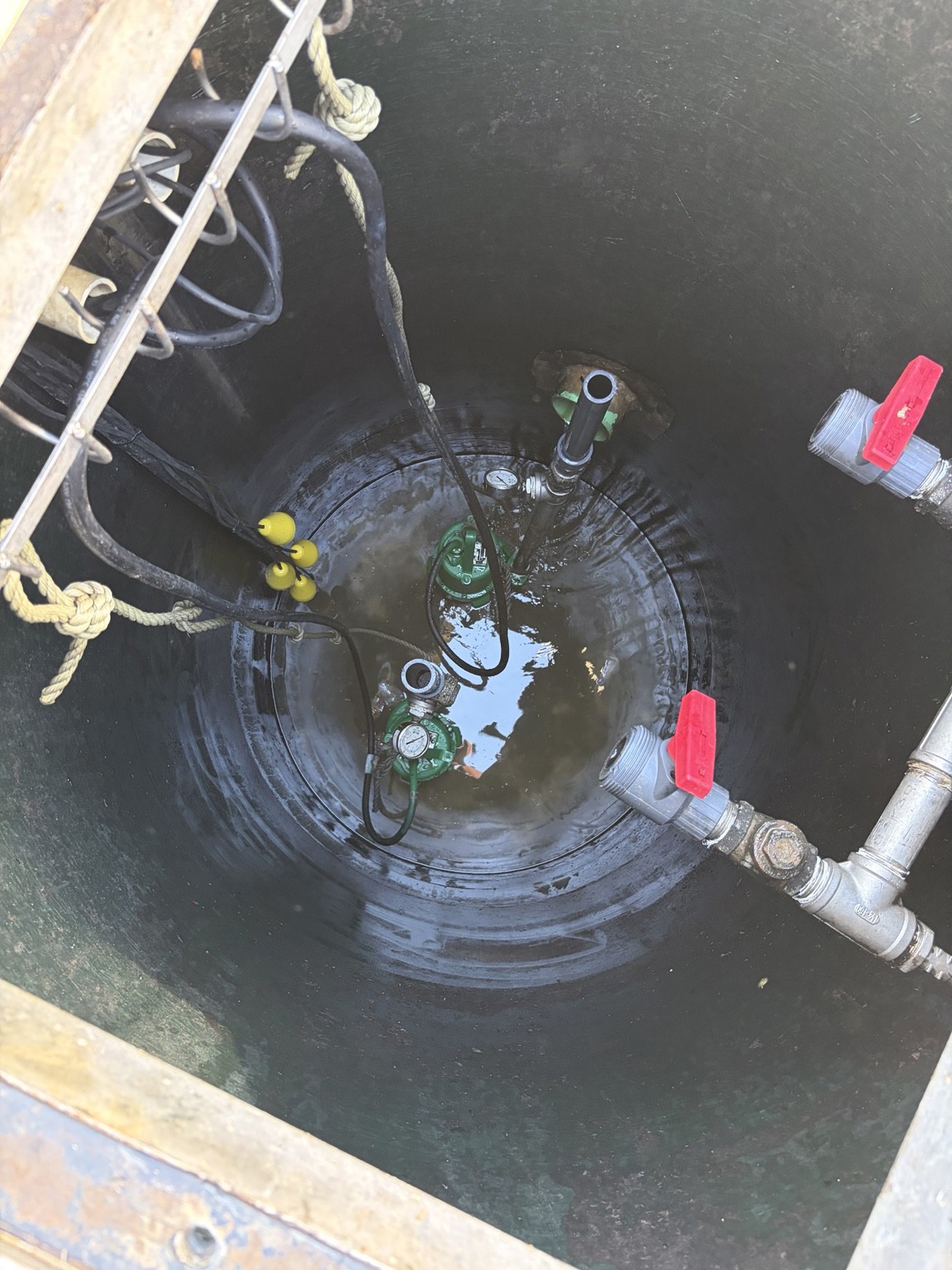
Real DrainBusters field service: an open wastewater station showing the pumps, level-control components, valves and discharge piping that must work together.
Pumps
We evaluate whether the installed pump or pumps start, move wastewater and operate normally before assuming replacement is the answer.
Floats & Level Controls
Start, stop, lead/lag and high-water functions depend on the station’s level-control arrangement working in the proper sequence.
Alarm & Controls
We check accessible alarm and control operation to determine whether the station is calling for the pumps correctly and where the failure may be occurring.
Check Valves & Piping
Backflow, a restricted check valve or a piping problem can keep a working pump from lowering the basin the way it should.
Basin Condition
Grease, solids, debris and buildup can interfere with pumps and level controls. Pump-down and cleaning may be needed before accurate diagnosis.
Discharge & Downstream Sewer
A station can have a working pump and still fail to move wastewater if the discharge path or downstream sewer is restricted.
We Check More Than the Pump. DrainBusters can lower the basin, clean accessible components, test the operating sequence and evaluate the discharge path before recommending cleaning, repair or replacement.
COMMON LIFT STATION FAILURES
What We Diagnose
Lift station problems can come from the pump, level controls, electrical equipment, basin condition or the discharge system. We diagnose the failure pattern before recommending the repair path.
High-Water Alarm or Full Basin
A high level can point to pump failure, a float or level-control problem, excessive inflow, a restricted discharge or another downstream wastewater issue.
Pump Will Not Start or Cycle
The cause may involve the pump, float or level control, wiring, electrical condition, a jam or another control-system fault.
Pump Runs but Basin Stays High
A weak or worn pump, check-valve problem, discharge restriction or downstream sewer issue can keep the basin from lowering normally.
Breaker Trips or Control Panel Problem
Electrical faults, motor load, moisture intrusion or failed control components such as contactors or capacitors can prevent normal pump operation where those components are used.
Pumps Cycle Incorrectly or One Pump Does Not Run
On duplex or multi-pump stations, lead/lag sequence, floats or level controls, control logic or an individual pump failure can keep the system from alternating or sharing the load correctly.
Recurring Failures, Grease or Solids Buildup
Grease, solids and debris can interfere with pumps, floats, level controls and piping. Pump-out and cleaning may be needed before the true operating problem can be diagnosed.
The Alarm Tells You There Is a Problem — Not Which Component Failed. DrainBusters evaluates the pump, floats or level controls, alarm and control equipment, basin condition, check valves, discharge piping and downstream sewer before recommending repair or replacement.
LIFT STATION CLEANING & MAINTENANCE
Lift Station Cleaning & Preventive Maintenance
Lift station service can include pump-out, basin cleaning, grease and solids removal, component inspection and operating tests. Whether the visit is preventive maintenance or a response to an alarm, DrainBusters works through the station in a practical order so the system can be cleaned, evaluated and tested before repair or replacement is recommended.
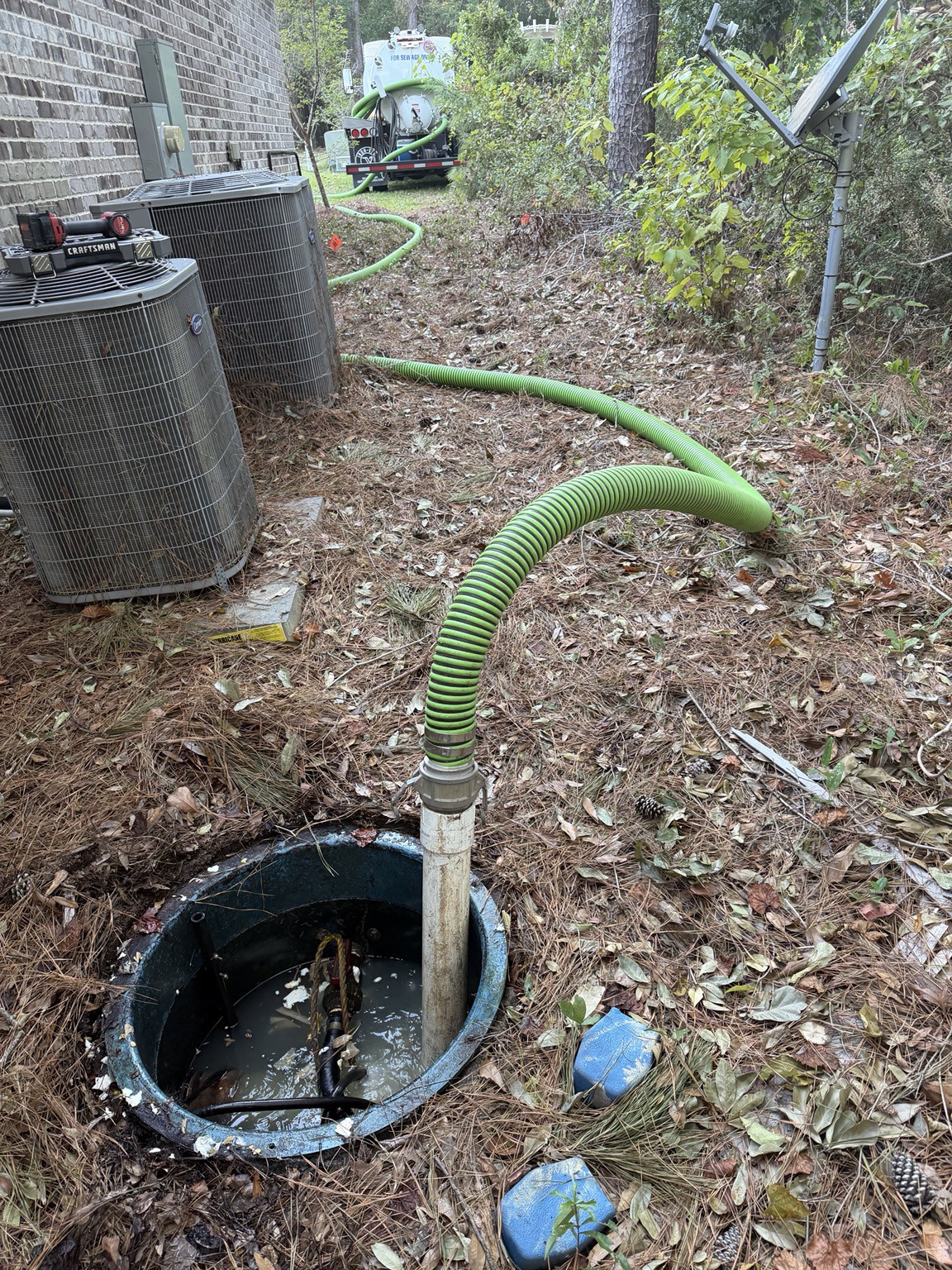
Real DrainBusters field service: vacuum equipment lowering a wastewater station so the basin and operating components can be cleaned, inspected and tested.
01
Confirm the Alarm & Basin Condition
We verify the reported symptom, check the wastewater level and determine whether the station is actively pumping or holding wastewater.
02
Pump Down the Basin When Needed
If wastewater, grease or solids prevent inspection, our vacuum equipment can lower the basin so the station can be properly accessed and evaluated.
03
Clean the Basin & Accessible Components
We remove buildup around accessible basin surfaces, pumps, floats or level controls and piping as needed so grease and debris do not hide the actual condition.
04
Inspect & Test Pumps, Floats & Controls
We evaluate pump response, level-control operation, alarm behavior and accessible control components to see whether the station is operating in the correct sequence.
05
Check the Discharge Path
A working pump can still fail to lower the basin if the check valve, discharge piping or downstream sewer is restricted. Hydro jetting and camera inspection may be used when the problem extends farther down the line.
06
Cycle, Document & Recommend
When conditions allow, we test station operation and explain whether cleaning, repair, component replacement, maintenance or additional corrective work is recommended.
Cleaning Is Part of the Diagnosis. Grease, solids and debris can keep pumps, floats and controls from working correctly. Pump-out and cleaning may be necessary before the station can be properly tested and the real mechanical, electrical or discharge problem confirmed.
CONTROLS • FLOATS • ALARMS • ELECTRICAL
Lift Station Controls, Floats, Alarms & Electrical Diagnostics
A lift station depends on more than the pump itself. Floats or other level controls have to call for the pump at the right time, alarms have to respond to abnormal water levels, and control components have to deliver power in the correct sequence. DrainBusters checks the accessible control system methodically before recommending parts or pump replacement.
A Control Failure Can Look Like a Pump Failure. A failed float, level control or control component can prevent a mechanically capable pump from starting or cycling correctly. That is why we test the accessible control and electrical sequence before assuming the pump itself has failed.
Floats & Level Controls
We check accessible start, stop, lead/lag and high-water level controls for proper position, movement and operating sequence. Grease, debris, failed switches or an incorrect control sequence can keep a pump from cycling normally.
Alarm & High-Water Controls
We verify accessible alarm operation and determine whether the high-water condition is being caused by the level-control system, pump operation, excessive inflow or another station problem.
Contactors, Relays & Control Components
Where these components are used, we inspect accessible contactors, relays, capacitors and related controls for signs of failure, overheating, abnormal operation or damage that can prevent the pump from starting correctly.
Breaker Trips, Overloads & Motor Load
A tripping breaker can point to a jammed pump, excessive motor load, damaged windings, moisture, wiring problems or a failed control component. Repeatedly resetting the breaker does not identify the cause.
Wiring, Junctions & Moisture Intrusion
Accessible connections and junction areas are checked for corrosion, loose connections, damaged conductors or water intrusion that can create intermittent failures or prevent normal pump operation.
Duplex Lead/Lag & Alternation
On two-pump or multi-pump stations, the controls must alternate or stage pumps correctly. A failed float, control component or individual pump can keep the system from sharing the wastewater load as designed.
Real Lift Station Electrical Findings DrainBusters has encountered water intrusion in a lift-station junction box, a failed capacitor, contactor hum and a motor circuit that tripped the breaker even though the pump blades could still turn freely. Findings like these are why we test the control and pump system before assuming the pump simply needs to be replaced.
LIFT STATION PUMP REPAIR • REPLACEMENT
Lift Station Pump Repair & Replacement in Mobile County
A lift station pump that will not start, trips the breaker, runs without lowering the basin or repeatedly faults does not automatically need replacement. DrainBusters checks pump response, motor and electrical condition, level controls, check valves and the discharge path so the repair or replacement recommendation is based on the actual failure.
We confirm the pump is the failure before replacing it. A failed float, control component, restricted check valve, discharge problem or downstream sewer restriction can make a mechanically capable pump look like the problem.
When Repair May Be Appropriate
If the pump itself is still mechanically serviceable and the failure is isolated to an obstruction, accessible connection, serviceable component or surrounding control issue, targeted repair may restore normal operation without unnecessary pump replacement.
When Replacement May Make Sense
Replacement may be the better path when testing confirms failed or open motor windings, severe motor damage, major mechanical wear, repeated pump failure or a condition where repair is no longer dependable or economical.
Pump Runs but Basin Stays High
A running motor does not prove the station is moving wastewater correctly. We evaluate pump performance, backflow or check-valve problems, discharge restrictions and the downstream sewer before blaming the pump itself.
Replacement Must Match the Station
A replacement pump should fit the station’s wastewater duty, discharge conditions, basin and control arrangement and single-pump, duplex or multi-pump configuration—not simply fit in the opening.
A new pump is only part of restoring the station. When a pump is replaced, the surrounding floats or level controls, alarm and control sequence, check valves and discharge path still need to be evaluated so a new pump is not installed into an unresolved system problem.
REAL DRAINBUSTERS FIELD EXPERIENCE
Real Lift Station Failures We’ve Diagnosed in Mobile County
Lift station failures do not always point to one obvious component. In Mobile County wastewater systems, DrainBusters has found electrical, control, pump and basin conditions that can create similar symptoms. Those real field findings are why we diagnose the station methodically instead of replacing the first component that appears suspicious.
FIELD CASE 01
A Failed Capacitor Was Not the Whole Problem
On one lift-station service call, we found a failed capacitor and a motor circuit that continued to trip. That combination showed why replacing the capacitor alone would not have corrected the station problem. The pump, motor circuit and control system had to be evaluated together.
FIELD CASE 02
Water Intrusion & Control Problems Can Mimic Pump Failure
We have encountered water intrusion in a lift-station junction area, contactor hum and abnormal electrical behavior while the pump itself could still appear mechanically movable. Those findings are why we check accessible wiring, controls and motor condition before condemning the pump itself.
FIELD CASE 03
Sometimes the Basin Has to Be Lowered Before the Failure Is Clear
A full or dirty station can hide floats, controls, piping and the pump itself. When needed, our vacuum equipment can lower the basin and remove wastewater so accessible components can be cleaned, inspected and tested under conditions that support a more accurate diagnosis.
Field Experience Changes the Diagnosis. One symptom does not prove one failed part. DrainBusters evaluates the accessible pump, controls, level system, basin condition and discharge path so the recommended repair addresses the failure we actually find.
Real DrainBusters lift-station service findings from wastewater systems in Mobile County.
HOMES • BUSINESSES • MANAGED PROPERTIES
Residential & Commercial Lift Station Service
Lift-station demands change with property use, wastewater volume and system configuration. DrainBusters services residential systems, commercial facilities and managed properties across Mobile County with diagnosis, pump-out and cleaning, controls and floats, pump repair or replacement, and discharge-line troubleshooting when needed.
RESIDENTIAL
Residential Lift Stations
A high-water alarm or failed pump at a home can quickly become a wastewater and sanitation problem. We evaluate accessible pumps, floats, controls, check valves and discharge conditions, and can lower the basin when needed to reach components and diagnose the failure.
COMMERCIAL
Commercial & Facility Lift Stations
Commercial facilities may depend on single-pump, duplex or multi-pump stations to keep wastewater moving. We evaluate pumps, controls, alarms, basin conditions and discharge restrictions with the goal of restoring reliable operation while avoiding unnecessary component replacement and downtime.
PROPERTY MANAGEMENT
Property Managers & Multifamily
Apartment communities, rental properties, HOAs and managed facilities need clear findings and dependable follow-up. DrainBusters can help with emergency failures, pump-out and cleaning, repair recommendations and maintenance planning so repeat problems are identified instead of repeatedly treated as isolated alarms.
Preventive Service Can Catch Problems Before an Overflow. Recurring lift-station service may include basin-condition checks, pump and float observation, alarm and control review, cleaning, check-valve and discharge evaluation, and documenting developing issues. Service needs vary by station, so maintenance should be based on the actual equipment, wastewater load and operating history.
From private residential systems to commercial and multifamily properties, the goal is the same: identify the cause, restore wastewater movement and reduce repeat failures.
MOBILE COUNTY LIFT STATION SERVICE
Lift Station Service Across Mobile County
DrainBusters provides lift station diagnostics, pump repair and replacement, basin pump-out and cleaning, control and alarm service, and discharge troubleshooting throughout Mobile and Mobile County. We serve residential, commercial and managed lift-station systems from our Theodore and West Mobile service areas.
Common service areas include Mobile, West Mobile, Theodore, Tillmans Corner, Semmes, Irvington, Grand Bay, and surrounding Mobile County communities.
Lift Station Service Areas Across Mobile County
LIFT STATION FAQ
Questions Customers Ask Us
Does a lift station alarm mean the pump has failed?
Not necessarily. A high-water alarm can be caused by a failed pump, float or level-control problem, an electrical or control issue, excessive inflow, a check-valve problem, a discharge restriction or basin conditions. The station should be diagnosed before the pump is condemned.
What should I do if my lift station alarm is on or the basin is full?
Limit wastewater use until the cause is identified, especially if the level is continuing to rise. Do not enter the basin, bypass safety controls or work inside an energized control panel. If wastewater is overflowing, avoid contact and keep people and pets away while the station is evaluated.
Can you pump out a full lift station?
Yes, when site access and conditions allow. Our vacuum equipment can remove wastewater and lower the basin so accessible pumps, floats, controls and piping can be cleaned, inspected and tested. Pumping the basin down creates access for diagnosis; it does not by itself correct the cause of the failure.
Can a lift station pump run and still not move wastewater?
Yes. A motor can run while the station still fails to lower the basin. Pump-performance problems, backflow or check-valve issues, discharge restrictions and downstream sewer conditions can all limit flow, so the pump and discharge path should be evaluated together.
When does a lift station pump need to be replaced?
Replacement may be appropriate when testing confirms failed or open motor windings, severe motor or mechanical damage, repeated pump failure or a condition where repair is no longer dependable or economical. A replacement should also match the station’s wastewater duty, discharge conditions and control arrangement.
Can you diagnose lift station floats, alarms and controls?
Yes. We evaluate accessible floats or level controls, alarms, contactors and related control conditions as part of the lift-station diagnosis. The goal is to determine whether the problem is in the pump, control sequence, level system or another part of the station before recommending repair or replacement.
Can you service the lift station discharge line too?
Yes. When the pump operates but wastewater cannot leave the station correctly, the discharge path may need additional troubleshooting. Depending on the system and access, hydro jetting, sewer-camera inspection or locating may be used to investigate restrictions or downstream problems.
Do you service commercial, duplex and multi-pump lift stations?
Yes. DrainBusters services residential, commercial and managed-property lift stations, including systems with single-pump, duplex or multi-pump configurations. Service is based on the station’s equipment, controls, basin condition, discharge setup and site access.
Lift Station Alarm or Full Basin?
Call DrainBusters for lift station diagnostics, basin pump-out, pump and control troubleshooting, repair or replacement, and recurring service across Mobile County.
24/7 Emergency Service • Residential • Commercial • Managed Properties