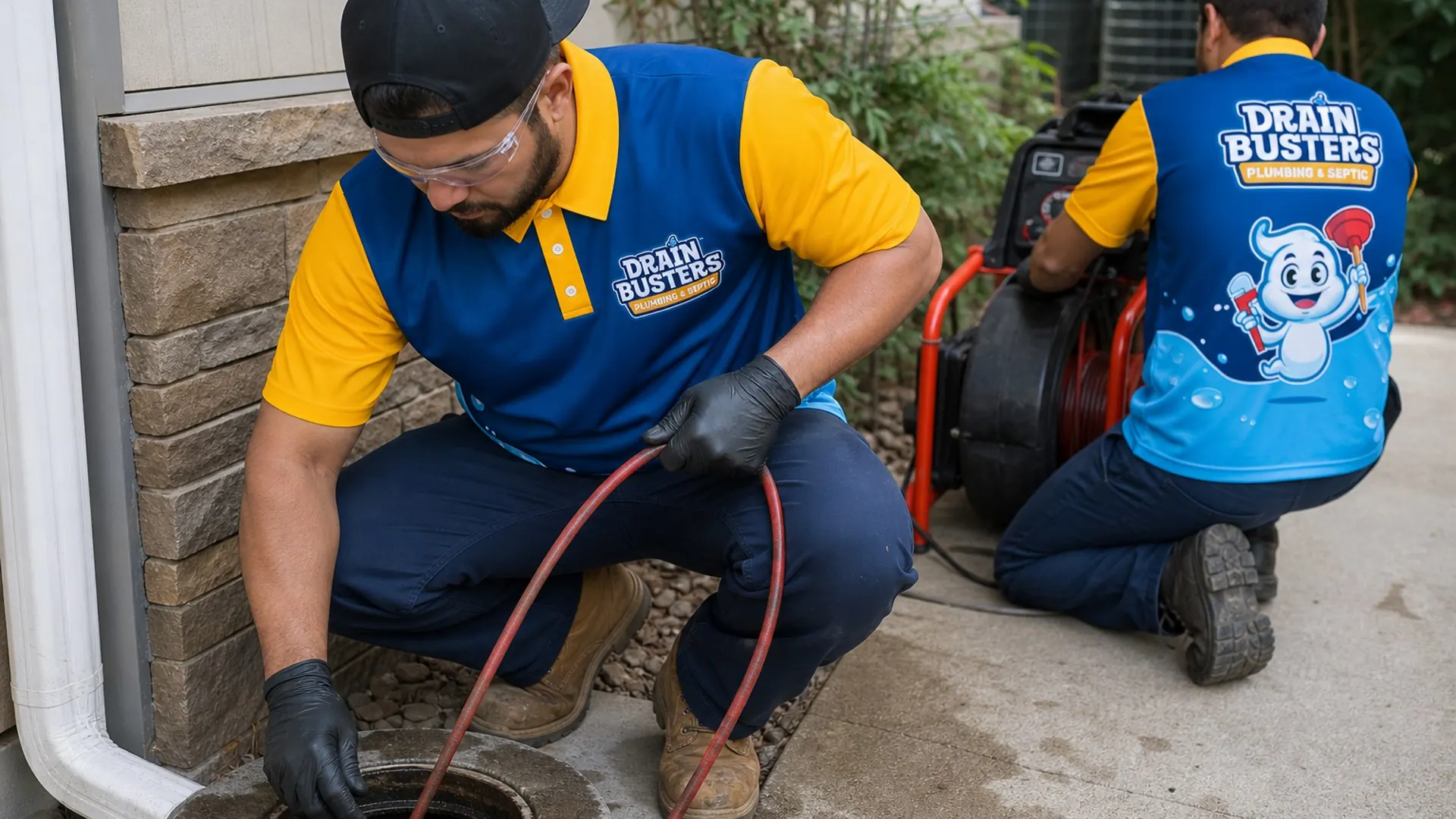
Apartment communities and commercial properties put far more demand on drain systems than a typical single-family home. More occupants, more kitchens, more restrooms and more daily use mean that a small buildup problem can turn into an expensive backup quickly. There is no single cleaning interval that fits every property, but a simple maintenance strategy can reduce emergency calls and help property managers identify problem lines before they become repeated disruptions.
There is no universal commercial drain-cleaning schedule
The right frequency depends on the property. A restaurant kitchen may need attention far more often than an office building. An apartment building with a history of main-line backups may justify planned cleaning even when another building of the same size does not. Pipe age, grease load, occupancy, fixture count, past stoppages and cleanout access all matter.
Use the property’s history to set the starting interval
If a building has had the same drain or sewer line clog several times, the service history is one of the best maintenance clues available. Instead of waiting for the next emergency, note how many months typically pass between stoppages and schedule an inspection or cleaning before that pattern repeats.
Apartment properties: watch for repeat building and stack problems
At apartment communities, one clogged sink is different from several units reporting slow drains, toilet bubbling or backups around the same time. Repeated problems involving multiple units may point to a larger branch or main-line restriction. That is where commercial drain cleaning and, when appropriate, camera inspection can help identify whether the issue is buildup, roots, damage or something being repeatedly introduced into the system.
Restaurants and food-service properties: grease changes the equation
Kitchen drain lines can accumulate fats, oils, grease and food residue much faster than ordinary office plumbing. If a line repeatedly develops heavy soft buildup, commercial hydro jetting may be considered as part of a planned cleaning program when the piping and access are appropriate.
Commercial restrooms and high-traffic facilities
Retail stores, schools, medical facilities, warehouses and other high-use buildings can develop problems from wipes, paper products and foreign objects as well as normal buildup. Planned drain maintenance will not prevent someone from flushing the wrong item, but it can reduce the amount of existing restriction that new debris has to catch on.
Signs a property should move from reactive to preventive maintenance
Frequent emergency calls, repeated backups in the same area, slow drainage after a recent cleaning, recurring sewer odors, grease-heavy lines, known root intrusion, or a history of after-hours stoppages are all reasons to consider a planned schedule instead of waiting for failure.
What a practical maintenance visit can include
Depending on the property and the problem, maintenance may involve cable cleaning, main-line cleaning, jetting, camera inspection, locating or simply documenting access points and problem areas. The goal is not to perform every service on every visit. The goal is to keep the known trouble lines functioning and create a history that helps the next service call become faster and more predictable. For a closer look at method selection, see our drain snaking vs. hydro jetting guide.
Why pricing should be based on the property
Apartment and commercial systems vary widely. A ground-level cleanout with easy truck access is a very different job from a roof access, interior floor drain, long sewer run or line that requires multiple pieces of equipment. That is why DrainBusters prefers to understand the property and recurring problem before pretending every drain job should have one universal flat price.
Build a drain-maintenance plan for your property
DrainBusters works with apartment communities, property managers and commercial facilities throughout Mobile County. If your property is dealing with recurring drain or sewer problems, learn about our commercial drain cleaning service. If the property also relies on a wastewater lift station, alarms, pump failures, floats, and controls fall under lift station service and repair, while our lift station cleaning and preventive maintenance service covers pump-down, basin cleaning, inspection, and scheduled maintenance. You can also contact DrainBusters at 251-665-9898 so we can review the problem areas and help determine whether reactive service or a planned maintenance approach makes more sense.
Reviewed by Bruce Marschke — Owner of DrainBusters Plumbing & Septic, Alabama Master Plumber & Master Gasfitter. Updated November 8, 2026.