SUMP PUMPS • FLOATS • CHECK VALVES • DISCHARGE DIAGNOSIS
Sump Pump Repair & Replacement in Mobile, AL
DrainBusters diagnoses sump pumps that will not start, run constantly, fail to lower the water, trip a breaker or cycle abnormally, then checks the float, basin, check valve and discharge path before recommending repair or replacement.
Alabama Master Plumber • Residential & Commercial Pump Service • 24/7 Emergency Service
GROUNDWATER & DRAINAGE PUMP SYSTEMS
A Sump Pump Has to Move Water Away From the Property
A sump pump normally handles groundwater or drainage water collected in a basin or low area. The pump is only one part of the system: reliable operation also depends on the float or switch, the basin and inflow, the check valve and a discharge path that can carry the water away without sending it back.
Pump & Motor
The pump must start reliably and move the collected water at the rate the property and basin require.
Float or Switch
The float or switch tells the pump when the water has risen high enough to start and when it should shut off.
Basin & Inflow
Debris, restricted movement or unusually heavy inflow can affect cycling and make a working pump appear inadequate.
Check Valve & Discharge
The check valve and discharge piping must let water leave the basin without excessive restriction or immediate backflow.
COMMON SUMP PUMP PROBLEMS
Signs Your Sump Pump Needs Diagnosis
The first symptom may be standing water, unusual cycling, a pump that never starts or a pump that runs without lowering the basin. These signs point to a system that needs to be checked before water rises into the protected area.
Pump Will Not Start
The water rises but the pump stays silent, does not respond to the float or never begins moving water.
Water Stays High
The pump runs, but the basin level drops slowly, barely changes or rises again immediately.
Pump Runs Constantly
Continuous inflow, a stuck float, backflow or a discharge problem can keep the pump running too long.
Short or Repeated Cycling
The pump starts and stops too often, which can point to float position, backflow, basin conditions or changing inflow.
Unusual Noise or Vibration
Grinding, rattling or abnormal vibration can signal debris, wear or mechanical trouble inside the pump.
Breaker Trips or Power Symptoms
Repeated trips, humming without pumping or intermittent operation can indicate an electrical or motor problem that should be diagnosed safely.
DIAGNOSE BEFORE REPLACING
Pump, Float, Check Valve or Discharge Problem?
A sump pump that is not protecting the property does not automatically need a new motor. We work through the parts that control when the pump starts, whether it can actually move water and whether that water has a clear path away from the basin.
Pump Response
Determine whether the motor starts, sounds normal and actually moves water when the system calls for pumping.
Float or Switch
Check whether the level control can move freely and calls the pump on and off at the expected points.
Check Valve
Look for signs that pumped water is returning to the basin or that the valve is restricting normal flow.
Discharge Path
Evaluate visible discharge piping and symptoms of restriction, poor routing or another condition that prevents normal drainage.
STANDING WATER IS A SYMPTOM
Where the Water Is Coming From Still Matters
A sump system can fail because the pump is bad, but a working pump can also be overwhelmed by unusually heavy inflow or defeated by water returning through the discharge. The basin, water level and discharge behavior help show whether the pump is the actual problem.
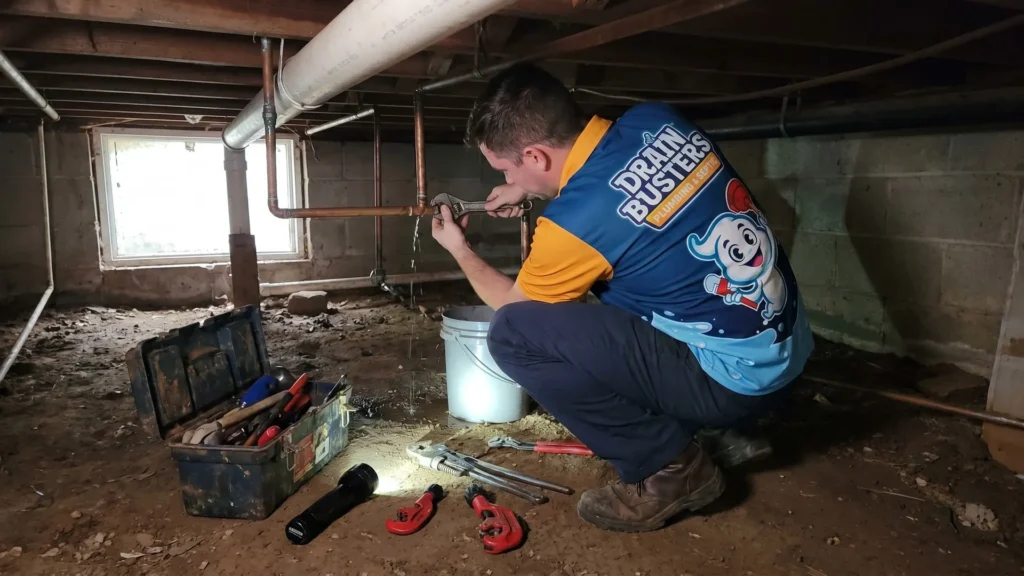
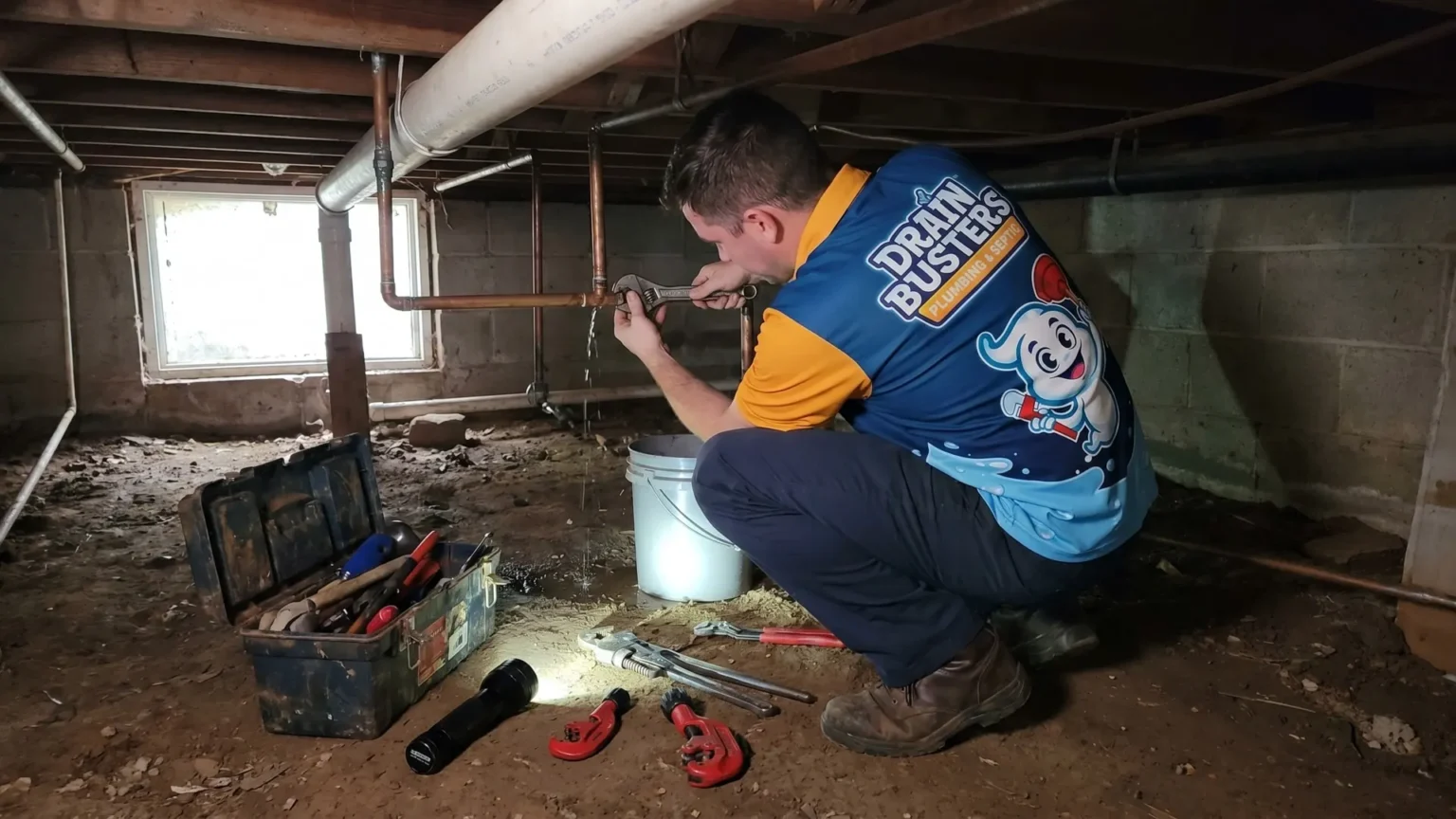
Real DrainBusters crawlspace service work. Sump-pump diagnosis includes looking at the surrounding conditions, basin and visible discharge—not just the pump itself.
A new pump will not correct a blocked discharge or water that immediately returns through a failed check valve. The system needs a usable path to move water away from the protected area.
TEST • ISOLATE • VERIFY
Our Sump Pump Diagnostic Process
1. Confirm the Symptom
Document the water level and whether the pump is silent, humming, running continuously, cycling abnormally or failing to lower the basin.
2. Check Pump Response
Verify whether the pump responds when called and whether it is actually moving water instead of only making noise.
3. Evaluate the Float
Check accessible float or switch movement and whether the control sequence starts and stops the pump correctly.
4. Inspect the Basin
Look for debris, restricted float movement, buildup or another visible basin condition that can interfere with normal operation.
5. Evaluate Check Valve & Discharge
Look for backflow, restriction or another discharge condition that keeps pumped water from leaving the system normally.
6. Explain the Repair Path
Separate a component repair, pump replacement and any surrounding drainage or discharge condition so the recommendation matches the failure.
REPAIR VS. REPLACEMENT
Not Every Sump Pump Problem Requires a New Pump
If the pump can still move water reliably, the repair may involve the float, switch, check valve, obstruction or discharge condition instead of complete replacement. When the pump has electrically or mechanically failed—or can no longer move water dependably—replacement may be the better path.
Repair May Make Sense When
The pump still operates and testing points to a float, switch, check-valve, debris or discharge problem that can be corrected without replacing the pump.
Replacement May Be Better When
The motor has failed, the pump is mechanically damaged, repeatedly unreliable or cannot lower the water level reliably under normal conditions.
SUMP PUMP VS. WASTEWATER PUMPS
Make Sure the Right Pump System Is Being Serviced
A sump pump normally handles groundwater or drainage water. Grinder pumps, effluent pumps and lift stations move sewage or wastewater and use different equipment, controls and service logic. Identifying the system first prevents the wrong repair approach.
Grinder Pump
Moves sewage from a home or building when gravity cannot carry it to the sewer or downstream system.
Effluent or Septic Pump
Moves clarified wastewater from a septic pump chamber to another treatment or dispersal component.
Lift Station
Uses one or more pumps, controls and level devices to move sewage or wastewater from a collection basin.
MOBILE COUNTY SUMP PUMP SERVICE
Sump Pump Repair & Replacement Across Mobile County
DrainBusters provides sump-pump diagnosis, repair and replacement across Mobile and Mobile County from our Theodore and West Mobile service presence.
Common service areas include Mobile, West Mobile, Theodore, Tillmans Corner, Semmes, Saraland, Irvington, Grand Bay and surrounding Mobile County communities.
SUMP PUMP FAQ
Questions Customers Ask Us
What does a sump pump do?
A sump pump removes collected groundwater or drainage water from a basin or low area before the water rises into a crawlspace, mechanical area or other part of the property. The pump depends on a working float or switch, a usable basin, a check valve and a clear discharge path.
Why will my sump pump not turn on?
The cause may be a failed pump, a stuck or damaged float, a power problem, debris in the basin or another condition preventing the pump from starting. The pump and controls should be checked before replacement is recommended.
Why does my sump pump run constantly?
Constant running can come from a stuck float, heavy or continuous inflow, a check valve that allows water to return, a restricted discharge line or a pump that cannot keep up with the water entering the basin.
Can a sump pump run but still leave the water high?
Yes. A worn pump, restricted discharge, failed check valve, blocked piping or excessive inflow can keep the water level high even while the pump is running.
Can a bad float make the sump pump look dead?
Yes. If the float or switch does not call for the pump correctly, the pump may never be energized even when the pump motor itself can still operate. That is why the float and pump response should be tested before replacing the pump.
When should a sump pump be replaced instead of repaired?
Replacement may be the better option when the pump has electrically or mechanically failed, is damaged, repeatedly unreliable or can no longer move water dependably. The basin, float, check valve and discharge conditions should be considered at the same time.
Do you service commercial sump pumps?
Yes. DrainBusters services residential and commercial sump-pump systems. Larger multi-pump or controlled wastewater systems may instead fall under our Pump & Lift Station Services depending on the equipment and application.
Do you provide sump pump service across Mobile County?
Yes. DrainBusters provides sump pump diagnosis, repair and replacement across Mobile, Theodore, West Mobile, Tillmans Corner, Semmes, Saraland, Irvington, Grand Bay and surrounding Mobile County communities, subject to site access and system conditions.
Sump Pump Not Starting, Running Constantly or Leaving Water Behind?
Call DrainBusters for sump-pump diagnosis, float and check-valve troubleshooting, repair and replacement across Mobile and Mobile County.
Sump Pumps • Floats & Switches • Check Valves • Discharge Diagnosis